
Maryke Van Zyl, Woolworth's Nutritionist and 2012 Absa Cape Epic entrant, gives riders some basic nutrition tips to ensure you keep your immune system strong: A good friend once said that rest is one of the most important parts of training! Maryke says she "now knows why he said that."
So here’s the thing, Maryke just loves being on the bike. Luckily, most of her friends also ride, and so much of herbest socialising is also connected to her favourite sport. So Maryke never thought that she could get to a point of not enjoying mountain biking. But she did - and apparently the reason for this is called ‘overtraining’. Unfortunately, Maryke experienced this for the first time while riding one of the toughest one day mountain bike races in the Western Cape. Starting a race with tired legs is pretty much a disaster – especially if you know you have 121 km to go!
So how did she get into this state? Maryke had had four weeks of hard training without resting to thank. The first signs that she was suffering from overtraining were there a few weeks before the race. Maryke's legs weren't recovering properly; She was feeling tired and grumpy; and a chronic sore throat and ears made it clear there was a drop in her immune system. But because of her love for the sport and the urgency to train for the Absa Cape Epic, Maryke kept on riding, and only realised her need for rest too late.
An exhausted rider having a rest at the Woolworth's Recovery Zone
A good friend once said that rest is one of the most important parts of training! Maryke says she "now knows why he said that." Feeding your body with the right nutrients to assist in optimal recovery and immune support is also essential.
Woolworth's Recovery Zone hand out Recovery packs with a perfectly balanced meal for someone who has just completed a stage on the Absa Cape Epic route.
Illness in athletes and probiotics
For many athletes fatigue, particularly associated with recurrent infections and a decline in performance, are synonymous with hard training. There might be a good explanation for all this, as well as a possible prevention.
High intensity exercise is associated with changes in many scientific measures of the immune function. Stress experienced by the body of “over trained” athletes can cause the suppression of the immune system which may lead to the reactivation of Epstein Barr Virus (EBV) infections. EBV is a recognised cause of fatigue and occurs in 70%- 90% of the population. This reactivation of the EBV infection may lead to inflammation. Due to inflammation the well trained athlete will battle with recurrent sore throats and upper respiratory tract infections, which will impair performance.
A study of elite swimmers over a 30 day period of intense training showed that two thirds had symptoms of a viral infection or sore-throats. A possible solution to this is the use of probiotics.
Probiotics are “live” bacteria which, when consumed in sufficient numbers on a regular basis have numerous health benefits, specifically in strengthening the immune system. Lactobacillus acidophilus, the good bacteria often used in probiotic supplements have been shown to activate an immune response to antigens and have also been known for their protection in mucosal infections commonly found in fatigued athletes.
A study published in the British Journal of Sports Medicine investigated the effect of a selected strain of Lactobacillus acidophilus, namely LAFTI®L10 on fatigued athletes. This group consisted of well trained athletes complaining of fatigue, recurrent sore throats and impaired performance. The fatigued athletes were compared to healthy athletes who did not experience any of these symptoms. Both the healthy and fatigued athletes took LAFTI®L10 for four weeks.
After a month of daily administration, LAFTI®L10 had a restorative effect amongst the fatigued athletes. The immune performance parameter in the fatigued athletes improved by 311%. This means that after only a month’s supply of LAFTI®L10 the fatigued athletes had a similar level of resistance to infections as the healthy athletes. There is more good news - even the immune performance of healthy athletes improved after taking the LAFTI®L10 probiotic.
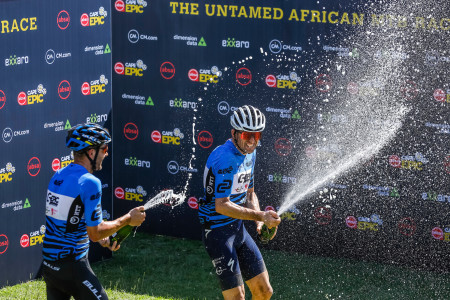
Karl Platt and Christoph Sauser win NTT Masters category in fine style